
₹295.00
Benefits
Product Description
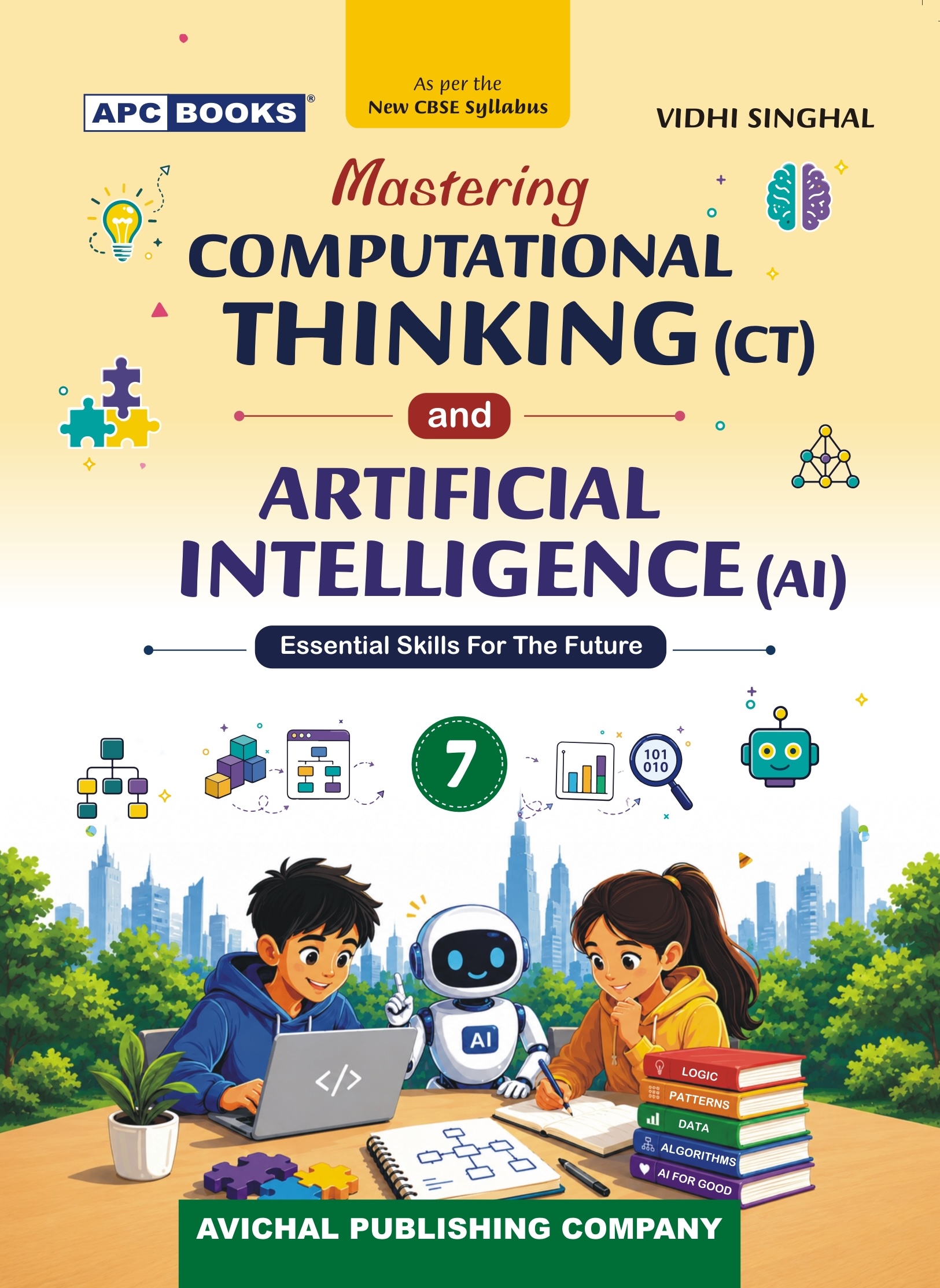
The Central Board of Secondary Education’s CT & AI Curriculum (2026) marks a significant shift in school education — from digital literacy to thinking, problem-solving, and innovation. It recognises Computational Thinking as the foundation for AI learning and emphasises real-world application, interdisciplinary learning, and ethical awareness. This series is designed in complete alignment with CBSE’s curriculum pillars:
Children learn best by exploring patterns, solving problems, asking questions, and making decisions. This book places thinking before tools through hands-on activities, real-life examples, and collaborative challenges. Computational Thinking is presented not as a standalone discipline, but as a way of thinking across subjects, helping students connect ideas from Mathematics, Science, Social Studies, and everyday life.
Each chapter concludes with a collaborative Mission that promotes creativity, teamwork, and real-world problem-solving. While the learning journey remains predominantly unplugged, Grade 7 introduces a small number of carefully designed plugged activities that allow students to apply their learning and experience CT and AI in action.
Why This Matters for Every School — Right Now
With NEP 2020, NITI Aayog’s AI initiatives, and the CBSE CT & AI Curriculum, Computational Thinking and AI are becoming essential parts of school education. For a Grade 7 learner, the goal is not to become a programmer. It is to develop skills that matter in every field:
If we want our children to shape the future rather than be shaped by it, we must give them the tools to think clearly, act responsibly, and imagine boldly.